Track and field, Kenya style

krystal 1

By Krystal Woodside

March 1, 2019

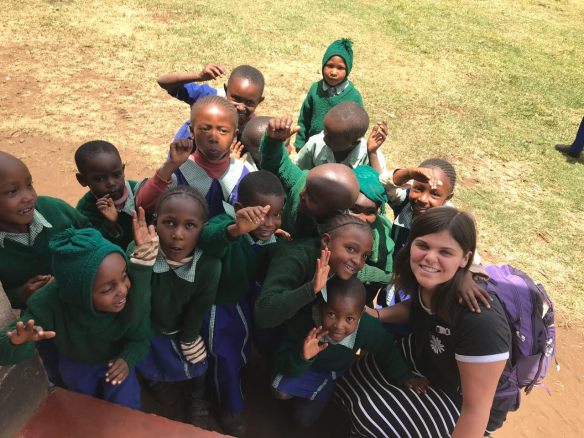
Today marks the end of our first week of teaching here in Kenya. The experience although quite different from Canada has been amazing thus far. My first impression of Rugatene Primary school was that everyone was so welcoming. Both the staff and the students were genuinely excited to have us at their school and I was just as excited to be there.

I have been so impressed by the dedication and ability level of the students. I am fortunate enough to be working with many different grade levels here in Kenya from grade 2 all the way up to grade 8. I have found that it doesn’t matter what class you are in the students are all so engaged. They seem genuinely happy to be learning which makes my job much easier! They listen attentively and are always ready to answer any question you ask them. They are also eager to hear stories of Canada or share their own experiences with me. They are especially interested to hear about the snow and cold temperatures in Canada. Everyone here in Kenya is surprised that I can wear short sleeves as many of the teachers and students are bundled up in sweaters or winter coats.

This semester Rugatene is participating in athletics which is almost identical to track and field in Canada. This means that I was able to watch and be a part of the team selection. In Kenya everyone gets a chance to try out for the team as participation is mandatory and the selection is held during school time. The students are divided based on height instead of based on age like in Canada.

krystal 2

The students patiently waiting for the teachers to measure their height so they can be divided into groups for the athletics.

Although the events are similar to here in Canada it was amazing to see the work that goes into preparing for the events. The students are involved  in everything from carving poles with a machete for the pole vault to marking the running track off with wood chips. Although they do not have a lot of the equipment we have in Canada they are still able to participate in all the events.
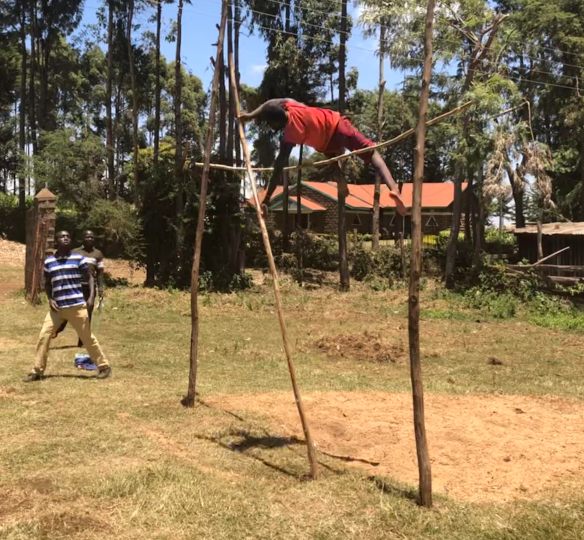
krystal 3One of the senior boys competing in the pole vaulting event

When the students actually began participating in the events I was amazed by the ability level. I have never seen students that could run so fast or jump so high. I was also impressed by their work ethic. When they fell or were unhappy with their performance they were quick to pick themselves up and try again.
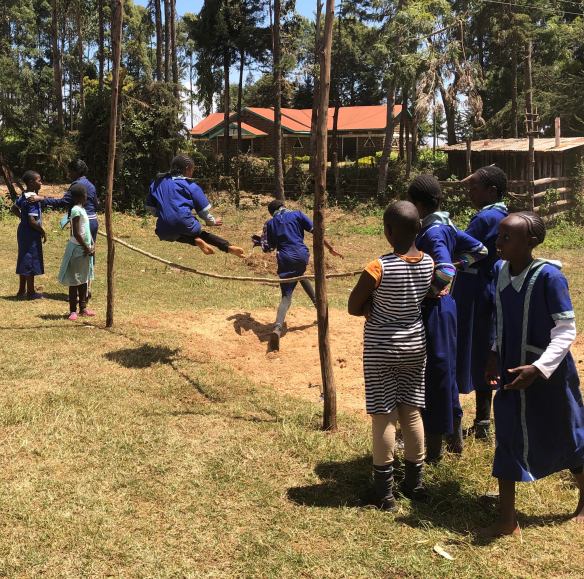
krystal 4

A few of the senior girls competing in the high jump event while their peers watched 

It was also great to see how much support the students had from their peers. Because athletics is a school wide activity it meant that for some events there were over 100 kids cheering their classmates on. That level of excitement is contagious.

By the end of the day I was sunburned and tired from cheering on the students but it was definitely worth it. Seeing the hard work and pride on the students faces is something I will not forgot. I am so lucky to have the opportunity to work with these amazing kids and I look forward to what the next 4 weeks will bring!

A sense of community

brent 2

By Brent Woodside

In our first week, we had the opportunity to visit one of the farms in the local area.  Tony was our driver for the day and came to to pick us up at the house to take us to Julius’ farm.  This was our first encounter with the Gypsy, a vehicle with two normal bucket seats upfront and two bench seats that face each other in the back where we all piled in.  After a bit of a bumpy ride, we arrived at the farm.

The farm was large for the local area having 18 dairy cattle and 2 full time staff and 1 casual employee.  However as they were currently in silage season, they had increased their labour force to include an additional 5 workers.

brent 1

The people on the farm were extremely welcoming showing us the cows and calves then the maize, and finally how they do silage.  Being from a farm it was very interesting to see how different their silage process is from what we do back in Canada. Almost all of the process is done by hand with the exception of the maize being mulched to be turned into silage.

Around dinner time, Julius arrived and as I went to speak with him he asked if I could help him with an errand.  As I jumped in the truck we drove to his hotel that he was in the process of building.

brent 4

Upon arriving, we picked up large jugs filled with water and drove them to a local farm.  On the way Julius informed me that the owner of the farm was a friend of his who was a doctor in Nairobi that had helped him in the past. The farm was recently built and did not yet have running water and that we were dropping the jugs off so that the livestock and workers would have water.

brent 3

It is incredible to see how everyone interacts here in Kenya.  When one person struggles, others in the area come to the rescue.  Also there is a sense of community that is overwhelming as people are always greeting each other and always making time to share their culture and language with anyone who takes an interest.

Making friends on the run

By Maude Bertrand
maude 1

Our house is in Naari. To find us, take the main road all the way to the Kirua market, then, turn left on the dirt road. You can’t miss it, it is the one where the lady sells bananas. Continue on that path for about 3 kilometres. Keep left at the crossroad, pass the sheep eating by the road. But be careful, there are a lot of rocks and holes! You will find us pass the big cattle field, behind the blue door. We live in a very rural setting, surrounded by fields and roads leading to other villages. This kind of setting is perfect to interact with the people of the community surrounding us.

Our group often goes on walks. It’s our way of getting exercise and discovering our surroundings. I must confess that even after one week, I still struggle to understand on what side of the road I am supposed to be walking. The Kenyans drive on the left…unless they are driving a very loaded motorbike (which is often the case) on a very rocky and uneven dirt road like ours. In that case, they might drive on any side, often having to horn at our large walking party.

People seem to be curious when they see us pass, but only a minority will wave, smile or say  “how are you”. Some individuals will even decide to walk with us, and we will get the opportunity to learn about their daily lives, and maybe learn a few Swahili words.
While most children are shy, some kids will happily run to meet us with grand excitation, or wave with a broad, beautiful smile :  “Mazungo, Mazungo!” or “the white men!”

One of my most magical moment since we arrived in Kenya happened on that dirt road. I am lucky enough to share my passion of running with Boniface, one of the staff member at the house. Every afternoon, when the air cools and the sun lowers, we go on a quick jog.

maude 2

Many women that we pass seem to find our work out ritual very funny, but once, one young lady that we were passing  started running with us. Without talking, she just tagged along and ran by our side (in crocs!!). It really lifted my heart to have the chance to run with local Kenyans and especially with that young girl who just seemed to enjoy the moment so much.

Every walk or run brings special moments. I am very excited to continue our daily walking ritual on the dirt road and meet more members of the community.

Making connections

By Hailey Hennessey

Today we were picked up by Mwenda, who is a part of the Kenyan staff with Farmers Helping Farmers. We went to the farm of Julius, who is Jennifer’s brother.

We were going to his farm with the intention of helping out on the farm by doing some silage. One of the machines was unfortunately broken so we were unable to help but this opened us all up to having the time to converse and make connections with some of the individuals who lived on the farm.

There were 2 women named Mary and Kristy, a man named Tony and a little girl named Lynn. We spent time with them for a few hours. Mary brushed and styled my hair along with my other female classmates. Once Mary was done I asked if I could do her hair, to which she accepted and I did a French braid in her hair.

hailey 1

We also listened to music and Mary and Kristy showed us some of the common ways to move to their music. They asked us to show them some of our traditional dance moves. Maude and I demonstrated to them some popular dances that have been seen in Canada, such as some step dancing and square dancing.

We all chatted about things that were typical in our home countries and shared laughs over the many differences.

Overall, this experience is the perfect example of adapting to whatever situation you are put into. We went with the expectation of doing one thing and were pleasantly surprised to spend the afternoon in a completely different manner.

The taste of Kenya

by Erica MacLean

February 22nd, 2019

What an amazing time it has been so far! With such a warm welcome into our home, community, and schools, it is easy to feel at home within the Naari community!  I, as well as the rest of my team consisting of pre-service teachers, have had the great privilege of enjoying the local foods, fruits and cuisine!  It is such a great way to learn about local culture, customs, and traditions. In Canada, a good meal with great food always brings people together and Kenyan culture is no different.

While staying at our house in Naari, we have been blessed with the company of two local Kenyan men who are quite talented in the kitchen.  They help prepare our daily meals and make sure to keep us fueled for our new daily experiences.  As I love cooking and learning new recipes I have had the chance to help, watch, and learn some of the delicious Kenyan recipes!  A favourite by most of the team were chapatis.  Made of wheat flour, oil, spices, and milk, these ingredients created a dough which is then cooked to perfection.  It is delicious to eat with stews, curry, beans, or simply by itself with tea!


Ah, Kenyan tea! Made with fresh milk, tea leaves, and water, this warm drink is so simple but so soothing whether drank in the morning with breakfast, or in the evening as a light before super treat!  It brings everyone together to share about their day and enjoy the delicious taste of Kenya!  I have yet to be disappointed with the food and company at each meal, and have a feeling this will remain a highlight of my Kenyan stay and experience!!


Orphanage visit makes an impression

brett 1
By Brett Roche

The highlight of my first week in Kenya would have to be going to the orphanage Mother Maria Zenelli’s Children’s Home in Kibirichia, just outside of Meru. We went there on Friday and had a great day with the kids and the staff, playing, touring, and helping out.

The home is for young children, mostly between the ages of a few months and 5 years old, who do not have any parents or immediate guardians to take care of them at such a young age. The home is run by sisters of the catholic church, who care for the children and nurture them in their youth, including accommodation, meals, early education, and medical concerns, which is all paid for through donations and funding.

Sister Esther told us that most of the kids have some type of family somewhere in Kenya, but it is better for them to be raised in the home at this young age, until they are old enough to go to school, either near their families or in a boarding school. The home continues to monitor the kids after they have left, and keeps tabs to make sure they are healthy and receiving the necessary support.

When we arrived, schools were on midterm break, so there were a couple of older children there helping out and playing with the kids too. This goes to show how much the home supports its kids, even after they enter school.

We had a great time hanging with the kids in the morning, and even though they did not speak English, we were still able to interact and play with them, and it was clear that it was fun and beneficial for both them and us. As soon as we walked in you could tell that the kids were very excited to see us, and immediately ran up to us to hold hands, hug, or try to get us to play.

For the most part, they were not hesitant at all, and were very comfortable with us even though we look and talk differently than them. I had a great time playing soccer and other games with the kids, as well as joking and running around with them. We were able to learn some of their names, and a few were able to say our names as well.

The kids were all very loving and friendly, and the experience really helped to show me that kids are kids, no matter where they are from, what language they speak, or what situation they grew up in. Even though many of these kids have grown up in very difficult situations, they were very happy and positive, and you would have never known about their sad backgrounds just by meeting them. They all inherently long to be held, played with, talked to, and loved. Because of this, I was very happy to be able to meet and play with these kids, and it is great to know that organizations like this exist around Kenya.

In the afternoon, we helped out with some cleaning and removing peas from pods, then lunch was generously provided by the sisters. Then Sister Esther was kind enough to give us a full tour of the grounds, including the farm, the schoolrooms, gift shop, and children’s home. It is clear that through talking to Sister Esther that she is very passionate about her work, and has a true love and compassion for children. She clearly works very hard, and is kind and friendly to all the staff, children, and guests. It was a pleasure getting meet her, and the opportunity she gave us will be one I will cherish forever.

We are hoping to get back to the children’s home before we head back to Canada, and I very excited to see the children and staff again.

A delicious introduction to Kenya

By Krystal Woodside

February 20th, 2019

Jambo from Kenya!

The 6 pre-service teachers including myself have now been in Kenya for 4 days and they have all been amazing! Today would have to be my favourite day thus far. Our original plan for the day was to head back to Julius’s farm to help with the silage similar to yesterday and then travel to a market close to Meru for supplies. Our car Gypsy however was still at the garage because of the fuel pump so we changed the plans. I am starting to realize that plans change a lot in Kenya but I am getting used to it and maybe even starting to enjoy this!

We decided to walk to the local market instead  to pick up some food for the next couple of days. The walk is about 40 minutes and the scenery is simply stunning. There is always lots to see between the animals and many friendly people we meet along the way. Alfred is also always great to teach us some Swahili on the walk.  We were lucky that because today was Wednesday the market was much less busy than when we had seen it on Sunday after first arriving. We were informed by Alfred that Sunday is the biggest day for the market and the crowds are always huge!

After walking around for a few minutes, we starting looking for the items on our list. It was incredible to see Alfred and Boni purchasing all the food. We walked from stand to stand and I stood in awe as they communicated with the vendors about what we needed and how much. There was so much to see at the market.

krystal 1From left to right we have Brent, Myself, Alfred, Maude, Hailey, Brett, and Boni standing in front of the market with a few of our purchases.

As they were shopping, I was admiring the produce and the slight differences to our fruit in Canada. One thing I was surprised about was that colours are often slightly different. Oranges in Kenya for example are actually yellow or even green but taste just as flavourful! In fact everything here is flavourful. Everything in Kenya is so fresh and much cheaper than anything we have in Canada. Our entire group was amazed to find out that one mango costs 10 shillings. This price in Canada can sometimes be up to 200 shillings at some stores!

krystal 2Here are Brent (left) and Brett (right) posing with the mangos we purchased.

After getting everything we needed,we helped load up Boni’s motorcycle so he could carry everything back for us. It is amazing to see how much can actually fit on the back of those vehicles.  After our shopping trip, we were going home with lots of local produce to use for this week.

krystal 3Maude (left) and Erica (right) standing beside the motorcycle with some of our items.

This trip to the market will definitely be something I can see us doing regularly during our time here in Kenya. It is nice to speak to the vendors and hear more about them and the items we were buying. Coming from a farm and always having a garden myself, I have also understood the value of fresh and local produce and it is great to see this in Kenya as well. Today was really great and I can’t wait to experience and then share with all of you our next activity here in Kenya!

Alfalfa makes a difference

by Ken Mellish and Peter Townshend    

Anne met us at the side of the highway at Ngusishu and we walked the mile on the dirt road to her farm. She farms with her husband milking two cows and selling milk. We had come to see her quarter acre of alfalfa. The area was dry and there was not much green in sight. The alfalfa stood out with its brilliant green growth contrasting to its surroundings.alfalfa 1

Alfalfa is the best source of high protein forage for milking cows. Last year, we saw some older alfalfa fields but farmers told us they were not seeding alfalfa because the seed was not good. We expected it was not the seed but the seeding methods. We bought some seed, did a germination test and found the seed was good. The next step was to sort out how to seed alfalfa and get a good crop.

We emphasized preparing a fine, firm seedbed. We then used a push type, Earthway seeder we had bought for carrot seeding. This seeder would evenly place the seed and pack the soil. The results were what we were looking for each time.  We saw even, healthy stands of alfalfa. Ann and her husband were one of the farms trying out the new seeding methods.

earthway spreader 2

An Earthway seeder

Ann planted a quarter acre of alfalfa. After the expected slow start by the alfalfa, she began feeding alfalfa to her cows. She cuts enough each day so that the field is harvested in five weeks. The first of the field is ready to cut again when she finishes the final cutting.  

She has some irrigation water available so she can get ten cuts a year. The alfalfa is deep rooted and goes down for water. Alfalfa captures nitrogen from the air by root nodules so only some cow manure rich in phosphorous and potassium is needed to keep fertilizer an optimum level.

alfalfa 2

Ann’s alfalfa

For results from the cows, milk production per day increased from 10 kg from two cows to 25 kg per day.

That’s an increase in income from 350 ksh (Kenyan shillings) to 875 ksh (Kenyan shillings) per day, or up to about $11 per day.  

This allowed Ann to pay school fees for her three children and buy some extra food and have some money for Christmas. These were very ordinary cows which were fed on some excellent alfalfa.

Several other farmers also reported similar results with feeding alfalfa.

Farmers Helping Farmers purchased enough seed to seed a further 15 acres on a number of farms.

It would be difficult to describe how pleased Ann was with her new crop and her increased income from milk. She gave us some farm fresh eggs from her farm as a gift.


My thoughts on potato farming in Kenya

IMG_0089 (1)

by Peter Townshend
Rollo Bay, P.E.I.

“I had a farm in Africa”. These are the immortal words of Karen Blixen in her wonderful autobiography about her time in Kenya which was made into the critically acclaimed movie Out of Africa with Meryl Streep and Robert Redford, a great movie!

There are countless people in Kenya who can say the same except the word is shamba not farm.

If you meet 100 people in Meru County and ask them if they have a shamba ninety nine percent would say, “yes of course!” 

Even the private secretary to the Governor of Meru County, a lawyer, is very proud to say he has a shamba and is working to build up his dairy herd.

fhf peter 2

In Canada, over the last two generations, most people could not get away from the farm fast enough but that is not the Kenyan experience.  Having a shamba in Kenya, typically one or two acres, gives you food security because you can grow virtually any crop.

Where we were in Meru County, we were in the foothills of Mt. Kenya. There is lots of productive farmland at elevations between 1,500 to 2,500 meters which allows for a wide diversity of crops and fruits.

peter garden 1

Coming from Prince Edward Island, where Tea Hill is the highest elevation around, I did not have any appreciation of the impact the change in elevation has on crops.  

We were on the equator and the climate was actually perfect. Daytime is similar to a hot day in July on P.E.I. but at night the temperature drops dramatically and is quite cool. 

We saw a potato field that looked like it had been hit by blight but had actually been hit by frost.

peter plants potatoes

Visiting potato farms in Kenya felt like I had a time machine and had gone back to the 1930s.  

Most farms had no machination at all; in many cases the land is cultivated with a grub hoe. A few farmers had oxen to do some work, tractors are extremely rare.  

I helped harvest potatoes on a large shamba of ten acres with two acres of potatoes where we literally dug potatoes out of the ground with our bare hands. My fingers have not recovered yet!  

This farm had a 350 hundred weight crop of beautiful potatoes that were one hundred percent saleable. I never saw such perfect quality! No insect damage or scab or internal issues at all. Any P.E.I. farmers would have been proud to offer these to his or her customer.

peter garden 7 digs

Kenyan potato production is in a time of rapid transition, they are seeing the value of using certified seed and proper inputs of fertilizer and pest control.

The land is naturally fertile and they only need to apply half the fertilizer growers on P.E.I. would need. There are no Colorado Potato Beetles or wireworms which make life much easier, but they have a lot of pressure from late blight the same as we do on P.E.I.

The biggest concern is water. They have two rainy seasons when they can usually grow crops without irrigation. The rain can be very localized and depends on the proximity to Mt. Kenya.

The soil is volcanic in origin, red in color, stone free and has a neutral PH but when it dries out it can make hard lumps.

peter potatoes

They can grow potatoes year round in Kenya if they have water but they typically plant two crops a year to coincide with the rainy seasons. Growing two crops per year can create challenges with having seed potatoes break dormancy and become ready to plant.  The most common variety is Shangi. It works well because it tastes good, cooks fast and has a very short dormancy. We actually saw them sprouting at harvest time.

Traditionally, farmers sell the large potatoes for consumption and keep the small ones to plant the next crop. As a result, many of the fields are one hundred percent virus infected with a very low yield potential.

IMG-0010

Dutch seed companies HZPC and Agrico are in Kenya supplying new varieties and virus free versions of old varieties.  In order to make them affordable to local farmers, they are multiplying three generations in the county in seventeen months.  This is done on large commercial farms with modern techniques and equipment. These farms are a carryover from the British Colonial days and a surprising number are still in place, although Kenya gained independence from the UK in 1963 and now operates as a commonwealth nation similar to Canada.  It is odd to see small hold farms beside large farms with self-propelled sprayers and GPS.

fhf 2019 7

There are many challenges for Kenyan potato farmers.  The marketing system is bizarre. Brokers come to the farm at harvest to buy potatoes.  They buy by the bag which is not weighted and typically hold over 100 kilograms!

Good storage is practically non-existent except on the very large farms so farmers are forced to sell cheap even though they know the price will double or triple in several months.  

Another major issue is the application of pesticides which is done with a back pack sprayer walking through the fields with no safety equipment at all. I gave out a lot of spray gloves which were donated by Cavendish Agri but they are only a small help to a very large problem which needs to be addressed.

peter carrots 2

In many ways, farmers face the same problems we do with production, transportation, marketing and regulation.  It was my great privilege to spend some time there as a fellow farmer and share some experiences with them. I will never forget walking down dusty roads in the “cradle of humanity” and receiving the wonderful hospitality of the Kenyan people.

Even with all of its challenges, I would describe it as a beautiful land with endless opportunities.

peter students


New Places and New Friends

by Jolene Vermeulen, vet student at the Atlantic Veterinary College

image1

Our Nairobi students from week 3!

Kenya is a beautiful place and I have got to experience so much during my visit which makes writing about it quite the challenge!

What stands out the most is the connections I have made along the way-as simple as a friendly hand shake, exchanging smiles of gratitude or finding mutual ground in a love of animals with other veterinarians.

image1 (1)

Even the small animals in Kenya need some love. Molly and Gypsy certainly loved it!

image1 (2)

A little helper that helped at the walk in clinic and he likes PEI potatoes!

I have had the great privilege of working with 6 students from the University of Nairobi, PhD students and veterinarians in Kenya. They have each contributed in their own way to our group and it has been a beneficial experience for all of us.

Many of these people do the necessary work to help farmers in Kenya 365 days of the year. Their drive and inquisitive nature was motivating and left a feeling of distinct privilege to have crossed paths with these people.

image3

Our first week of students from Nairobi! Cess and Jay helped with the big walk in clinic. We are so proud to call them colleagues!

image5

Katie and Mount Kenya in the background, after a big seminar session given to farmers in the area

We have met managers of dairies, farmers and perfect strangers.

All have been so kind, motivated and passionate about their work and their country.

image6

Mitchelle teaching eager farmers at one of the many seminar sessions

image8

Some of the FHF team comparing notes

As a dairy farmer in Canada it was a humbling experience to see the teamwork, appreciation and the ability to use all that is around them so efficiently and effectively. So keen for information and I was happy to be a part of empowering these farmers the way I have been in Canada.

Knowledge is power and over time the farmers in Kenya will be a force to be reckoned with!

image2

Our saving grace while we were in Kenya- Peter was more then our driver and came to be a dear friend. He kept us safe and got us were we needed to go to help the farmers of Kenya!

image7

Mitchelle taking a moment after doing her physical exam on a sick cow to give a kitten some love.

image4

Kenya would not have been the same without my wonderful classmates Katie and Samantha.