‘Every happy farmer’: a view from Kenya

20190201_102539

Samantha, Jolene and Katie during one of their first visits to a Kenyan farm to treat a sick cow.

By Samantha Pomroy, vet student, Atlantic Veterinary College

When I used to dream of coming to Africa, I had many different expectations of the people, animals and landscape. I can wholeheartedly say that Kenya has so far greatly surpassed any and all of those expectations.

20190209_061835

The sun rising behind Mount Kenya

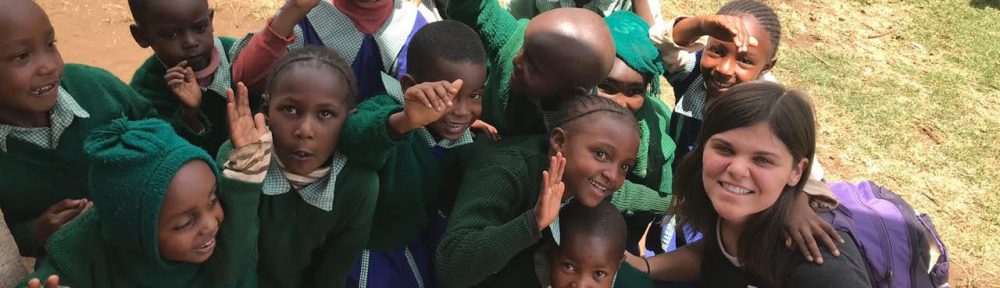
This country is filled with the most wonderful people, stunning scenery and incredible animals. We have never passed through or arrived at an area without being greeted with so much kindness and the biggest smiles. Everyone wants to say hi and all those who have been impacted by the work of Farmers Helping Farmers want to say thank you.

fhf vets 5

It’s amazing to see the impacts FHF has made at every place we visit. Whether it is a water tank for a community or dairy, or improved cow comfort and milk production on a farm, the benefits are far-reaching and in plane view.

At the Naari Dairy, we met the accountant named Moses who was so incredibly grateful for all the work FHF has done for the dairy and the surrounding community. He was so proud of the dairy and the incredible benefits it has provided to the area through improved cow health and production, along with improved human health and comfort. He gave us a tour of the facility and discussed their plans to improve and expand the dairy.

20190131_161033

Moses, the accountant at Naari Dairy pointing out his excitement for one of the water tanks FHF had previously provided.

The Wakulima Dairy was very impressive, processing over 50, 000 litres of milk per day within a beautifully built facility set against a backdrop of gorgeous Kenyan forest.

They also produce their own dairy feeds for the members of their dairy cooperative at their sister company Bora Feeds.

They supply their members with good quality feed for a fair price to ensure their cows are getting good nutrition resulting in better cow health and milk production.

20190129_161014

The beautiful view from Wakulima Dairy’s front entrance


On Saturday, February 2nd, we ran a walk-in clinic at Mbaaria market for the farmers within the Meru area. Farmers came from kilometres away, driving their cattle on foot to a temporary corral and chute system.

IMG-0032

Here we de-wormed over 450 cattle, 40 sheep and goats, and treated and provided medical advice for many more.

According to those that had ran these clinics in the past, this year seemed to have the largest turnout to date. I guess the word has really gotten around about the work that is done at this clinic and the many benefits it offers.

blog 18

IMG-0023

We worked tirelessly in the sun for about 12 hours only stopping to “take tea” and have a quick traditional Kenyan lunch provided by the nearby women.

We treated cases of East Coast Fever, anaplasmosis, mastitis, wounds, abscesses, pneumonia, and many other diseases. We also confirmed pregnancies in some cattle and gave plenty of advice on nutrition.

20190202_100209

IMG-0026

blog 17

A local veterinarian Dr. Remi Mugambi, Dr. John Vanleeuwen, two 5th year veterinary students from the University of Nairobi, Jolene, Katie and I, along with other FHF workers enjoyed the day and witnessed the impact we were making with every animal and every happy farmer.

Even though it was just one day with these animals and people, we know the information we provided will last much longer and will hopefully improve cow welfare, milk production and the farmer’s lives.

IMG-0025

Since then, we have travelled to many different dairy co-ops and farms giving seminars, treating cows, educating farmers and, of course, drinking tea! So far, this trip has been incredibly rewarding and eye-opening and I am excited to see what is still in store for us.

blog 16

fhf dr john 2dr john seminar 1dr john buuri dairy

vet student 4

Empowering project begins

feb 10, 2019 036

The Governor of Meru County, H.E. Kiraitu Murungi with other government officials and FHF members

By Teresa Mellish

Farmers Helping Farmers is proud to be part of a new three year project, entitled Food Empowerment of Kenyan Farm Women.

The project is being led by the Rotary Club of Charlottetown Royalty on P.E.I.  Farmers Helping Farmers will provide resources and technical expertise in Kenya.

The project kicked off officially this week in Kenya.

Read more about the project on our website.

feb 10, 2019 107

The first water tank was launched by Meru County Governor HE Kiraitu Murungi at  a school in the area the Kageni Womens Group live.

solar 1solar 2

The Kageni Womens Group members received solar lights on Wednesday.

These lights were made available through a generous donation from FHF honourary lifetime member and Rotary member, Winston Johnston.

feb 10, 2019 069

The Governor of Meru County and Lynn Townshend, treasurer of the Rotary Club of Montague

feb 10, 2019 049

FHF members Heather Jones and Paulette Jones received gifts from the Kageni Womens Group

feb 10, 2019 120 (1)

We visited the home of one of the Kageni Womens group members to see one of the recently installed water tanks.  The tank is 4,600 litres.  The group has 50 members and the other members will soon have their tanks installed.

The tanks are still empty but will be filled with water as soon as it rains through the gutters from the roof run off.   When there is water in the tank, she will not have to carry water from the stream at the bottom of the hill below her house.

These tanks are sponsored by the Rotary Club of Charlottetown Royalty with the Rotary Club of Nkubu.  Farmers Helping Farmers has agreed to assist with the implementation of the three year project.

feb 10, 2019 122

This photo shows the gutters at the same home.

FHf staff Salome Ntinyari says the plastic gutters are the best because they last longer than the metal gutters.

feb 10, 2019 126

The home owner’s three children came home from school while we were viewing her new tank.

feb 10, 2019 129

Since FHF is assisting with the delivery of the Rotary project, we took all of our staff to Nkubu to be introduced to the members of the Kageni Womens Group.


In this photo, Stephen Chandi and Leah Kariuki are exchanging ideas with one of the members of the Kageni Womens Group.

How the Naari Dairy is making a difference

IMG-0016
By Lynn Townshend, member of the Montague Rotary
I visited the Naari Dairy on Wednesday January 30th and have seen the huge benefit that our Rotary donation has made in conjunction with Farmers Helping Farmers for the farmers and their families in the area.
fhf 2019 10
They use this water to clean out the hundreds of milk cans that come in twice a day to the dairy. The cleaning water is still heated in pans over a wood fire before using but not having to haul water has saved hundreds of hours labour.
FHF dairy 1
The Naari Dairy  is improving and expanding every year under the support and education provided by Farmers Helping Farmer.
Their farmer base is growing and the farmers are increasing their daily milk production.
This will help each and every family associated with the dairy. This increase is also making it possible for the dairy to expand their services.
The dairy shop now includes food and other daily necessities that farm families can purchase with their credit at dairy for milk delivery.
fhf 2019 3
They are opening a credit union that will be able to help farmers purchase more and better cows at reasonable loan rates.
They operate a cafe featuring milk products.
fhf dairy 4
The chairman and the board have exciting plans for future improvements such as cooling tanks and possibly packing their own milk for retail.
Very exciting to see what education and some basic support can do for an entire community.
Well done Montague Rotary and Farmers Helping Farmers!
fhf dairy 5

Impressive first impressions

FHF katie 3
By Katie Gottleib, vet student at the Atlantic Veterinary College


The sun is shining bright and welcoming, the air a toasty 25 degrees swirled by a comfortably cool breeze. We trundle down a red dirt road that could belong to any P.E.I. burrow.  Beyond the truck windows greenery slides by sprawled across steep hills that climb towards the summit of Mount Kenya which stands in the distance looking like the fake backdrop to a 1950s film. 

Bright splashes of hot pink dazzle the eye where the foliage is broken by an Acacia tree alive with flowers in place of leaves.  People in cloths of equally explosive colours go about their days on either side of the highway.

The beauty of this country is equalled only by the beauty of the people who live here.  I am determined to bring into my own life the generosity with which we have been greeted at every stop of the way. 

There is always warm smiles, expressions of gratitude, and of course tea. 

Most impressive is the fearless open-hearted acceptance of strangers; a degree to which the rest of the world could learn from.

FHF Katie 1

Over the last couple of days we have visited the Wakulima Dairy and the Naari Farmers Dairy Cooperative.

Both are different but very impressive; Wakulima for its sheer size and wide reaching jurisdiction, Naari for its teamwork and vision for Farmers Rights. 

I was quite impressed by the way the Naari Co-op made sure to share its profits with each and every one of its members and provide not only care and support for the cows, but for the people themselves.

FHF katie 4

In between, we held two seminars covering a wide variety of topics from cow comfort to nutrition to reproductive success. 

Gathered under the embracing branches of an obliging mango or avocado tree, we hear the concerns of the local farmers and share what we can.

Then we walk or drive to nearby shambas (farms) where we provide care to any sick cows, check to make sure bred cows are pregnant, and provide feedback on the comfort of the cows shelter.  I was very excited to perform a rectal exam on a cow to confirm pregnancy! I had never felt fremitus before!

FHF katie 5

Tomorrow we will hold a huge “walk in clinic” for the area.  There we will be able to deworm as many as we can, check for pregnancy, and treat sick cows.  We have heard from multiple people how much the work done by Farmer Helping Farmers has improved the lives of the Kenyans we work with.  They have expressed so much appreciation for how FHF’s work has drastically improved the milk production by their cows and thus drastically increased the income each family receives.  Because of this more children are going to school and more people are able to pay for medical care.


FHF katie 2

The Journey Begins

Welcome to the 2019 blog for Farmers Helping Farmers!

We have copied the 2018 blog below.  Earlier blogs are available on our website starting from 2007. Just click on “Blogs” at www.farmershelpingfarmers.ca

Stay tuned to this blog for posts and photos from our 2019 travellers. The first group leaves in mid-January.  You can click on “Following” button below to get a notification whenever a post is added.

You can meet the team by clicking on the 2019 FHF Team link!

Asante – thank you – to all who read and all who travel! Thank you for being part of Farmers Helping Farmers.

ashley photo6 blog4 20180823_231741


A gleeful final post from Ashley Kendi

15 August 2018

 Jambo! Muuga! Hello!

 It’s been some time since my last post, but not for lack of experiences to share! In fact, August seems to have brought us an entire summer’s worth of Kenyan culture in just a couple of weeks, and time truly has flown by. Keeping the stories brief will be a challenge (or else I may have you reading for hours), but I’ll do my best without having to sacrifice any awesome-ness.

 First things first: THE SUN HAS RETURNED! Can you tell I’m in my glee? Applying sunscreen twice a day is a welcome change from zipping up my sweater and hiding under the hood. Of course, with this sun comes dry, dry, DRY dirt, leading to dusty scrubs, dusty hair, dusty hands, and undoubtedly, some fairly dusty lungs after travelling all day over the roads of Naari from farm to farm. We’ve learned that the rains won’t come again until October, so we’ve been happy to visit farmers who are preparing silage to feed their cows as less forage becomes able to be harvested in this dry season.

 Next, on to the real excitement. If you were to ask me at the end of July how things were going, I would have had to admit my days were feeling slightly monotonous and I had begun to feel worn-out. I partially blame the poor weather, together with some happenings in Canada that left me wishing to be in Newfoundland. Thankfully, the universe pulled through with a pick-me-up the evening Boni called me to the kitchen and said, “Kendi, would you all like to attend a wedding?” Oh, would we ever! Who could pass that up!?

 ashley photo1 blog4 20180807_092028

Picture 1: Where are the gumboots!?  (left to right: Lee, Ashley, Remmy)

 On August 5th, we all fancied up – our team almost unrecognizable without our scrubs and boots! – and visited nearby Isiolo, where Boni’s high school friend, Andrew, was marrying his lovely bride, Lydiah. We attended the ceremony in a Catholic church and while the service was primarily in Kiswahili, much of it was familiar to weddings at home – you know, reading Bible verses, speaking vows, singing hymns, taking Communion. The differences, however, were why we were there: The bridal party and groomsmen danced up the aisle! Children from the church congregation danced up the aisle! After the vows and the kiss, the bride and groom danced down the aisle! Everyone sang and shuffled in the congregation, while we four wazungu (“white people”) tried to keep the beat and absorb all that was happening. We completed the afternoon with a meal of nyama choma (“roasted meat”, Kenyan barbequed mbuzi, “goat”) and then pieces of wedding cake.

ashley photo2 blog4 20180823_231303 

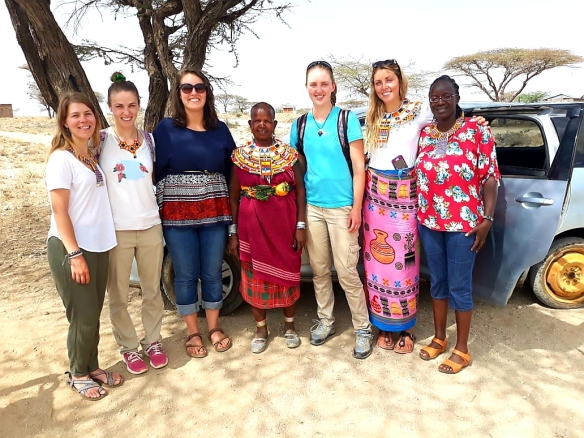
Picture 2: Visiting with Mama Josephat at Unity, a women’s village in Samburu (left to right: Ashley, Alexandra (VWB), Hannah, Mama Josephat, Aiyanna (VWB), Madi, Salome).

The next morning, joined by our friend Salome and two girls interning with Veterinarians Without Borders (VWB), we all piled back into a car to drive a bit farther north to Archer’s Post in Samburu County. Our mission for the day: visiting a women’s village called “Unity”. I was very fortunate to have been told about this village by a classmate, Rachael (doing equally awesome vet work this summer in Vietnam!), and was incredibly excited for an opportunity to learn about women-governing-women in the middle of such a patriarchal society. At the gate, we were delighted to be welcomed by song, dance, and giant, beautiful, beaded necklaces! I was in my glee! (The theme of today’s blog, apparently!) Following some group dancing and photos, we were welcomed by Mama Josephat* and given a history of Unity village – established in 2011 by half a dozen women, the village was built for those wishing to escape such challenges as oppression and domestic violence at home. Today, twenty-five women inhabit Unity, each with shared duties and responsibilities, all taking part in meetings several times a month, all with opinions and voices that can be expressed and heard.

In addition to learning about Unity, I took a moment to speak with a member of the village, Patricia, about the anti-FGM (female genital mutilation) movement. I was intrigued to learn about such a powerful push against such a deep-set and long-practiced tradition remaining in some parts of Kenya. Patricia explained to me that women in Unity do not practice FGM, and their daughters (like all girls in Kenya that are attending  school) are taught that no one can force the practice upon them. I asked what has encouraged modern Kenyan women to move away from the practice, and was told that aside from health and well-being, women are becoming aware of the unfair standard set against them – in a culture where men can take multiple wives, women were traditionally “circumcised” as girls in order to be fit for marriage and as a means of preventing infidelity. Patricia explained that the practice “takes a woman’s feelings”, and that women are becoming more aware of the injustice being done to them. In Kenya, female genital mutilation has been outlawed, but as with any major paradigm shift, the change and acceptance of something “new” takes both time and an increase in education. I left the village happy to have had the opportunity to learn about these forms of women empowerment in Kenya, and all of the change, potential, and growth that is coming in this beautiful country.

 ashley photo3 blog4 20180823_231406

Picture 3: Women in costume performing a traditional cultural “folkdance” at a Methodist Church women’s rally.

 Only days after a fantastic weekend, we chanced upon learning of a Methodist Church women’s rally happening at a nearby school. In our scrubs and boots, we visited in the morning to catch some of the singing, and to happily be greeted by Beatrice (mom) and Jane (Gatwiri). More glee! The ladies invited us back for the afternoon so that we could take in the real fun – traditional dance! We squeezed in one more farm for the day then returned to costumes, color, song, and the most vibrant energy ever! And while I sat on the grass with Beatrice by my side, I had another feeling of “wow, I am actually in Africa”. Honestly, how I’ve gotten through this entire summer with only tearing-up once from the emotion of it all is truly a miracle.

 ashley photo4 blog4 20180806_180416

Picture 4: Making fond memories with Magda and mandazi – two of my favorites from Kenya!

 The cultural immersion continued even at our Kenyan home, when George taught me the recipe for mandazi, yummy thin pieces of bread fried in oil (that to my delight are very similar to fry-jacks, my favorite breakfast treat from last summer in Belize!), as well as how to make masala tea (“spiced tea”, what we are more familiar with as chai) – tastes of Kenya to compliment the music, the dancing, and the colors.

ashley photo5 blog4 20180823_231606 

Picture 5. Delivering a seminar to all members of Naari Dairy, and to reach out especially to members who, due to time constraints, did not receive a visit from our team this summer.

 And with that, we’ve reached our final day in Naari. Lee, Remmy, and I delivered a brief presentation to farmers of Naari Dairy to highlight the most common challenges and issues we encountered with them over the course of our internship – primarily issues of underfeeding dairy meal and minerals and how to accurately measure the weight of cattle to determine appropriate doses of deworming medicine. Inspired by calendars printed with  nutritional messages (in Kimeru) that were distributed by the nutrition team and recognizing the limitations of our English handbooks, Lee drafted up a brief handout summarizing all of our advice that was then translated and given to attendees of the seminar. It was our wish that having the written information will help with their memory as well as the implementation of new practices, and will encourage farmers to share the knowledge with their neighbours.

 The seminar ended with a grand surprise when members of the Dairy presented us with thank-you gifts: “Naari Dairy” shirts, plus lesos (colorful fabric worn tied around the waist, often printed with a border and a proverb) for the girls! IN MY GLEE. Later that evening, many of our new friends joined us for one last dinner and bittersweet “goodbyes”. The surprises continued as Mama Melissa* walked in carrying a black forest cake (my absolute fave! IN MY… well, I don’t really need to say it again, do I?), the decoration of “Farewell Friends” reminding us of how blessed and honored we’ve been to have found ourselves a family from across the globe.


ashley photo6 blog4 20180823_231741Picture 6. Being wrapped in a leso – what a beautiful farewell present!

 For one last time from Kenya, I send my love and hugs.

 Ashley Kendi

 *Kenyan mother’s are commonly referred to by the name of their eldest child. For example, “Mama Josephat” is named for her eldest son, Josephat, and we sometimes call our friend, Caroline, “Mama Melissa”.

Sun, cool cases, and home stretch

By Lee Wesselius (vet student and QES Scholar)

Hello everyone, the sun has finally come out for the last few days after several weeks of mostly cloudy weather. The area is still very dry however as we haven’t had considerable rain in around 2 months. I’m sure the locals wouldn’t mind one day of rain anytime soon.

photo1 aug FHFThe vet team enjoying a cup of tea: Ashley, me, and Remmy

As Ashley mentioned in her last blog, we have all been given Kimeru names based on our personalities. The name given to me is Murithi which means someone who enjoys dealing with livestock. Given my farming background and my current pursuit of a veterinary degree, it was a good fit.

photo2 aug FHF

Making a new friend

Over the past couple weeks, we’ve managed to stumble onto a few interesting cases. The first one was a case of a prolapsed vagina in a dairy cow at the biggest farm in the area. In order to resolve this case, we cleaned it up, pushed it back into the cow and sutured the cow to hopefully prevent it from reoccurring. We also performed a castration at another farm on a big bull. Having only experienced castrations using a surgical approach, we decided on a bloodless approach this time. Finally, we saw a suspected case of actinobacillosis which resulted in a large swollen face. On the first day, we administered a diuretic and anti-inflammatory and came back the next day with sodium iodide to finish the treatment. The swelling had already significantly reduced by the next day and hopefully the sodium iodide will take care of the infection. The administration of the sodium iodide is done intravascularly and presented a bit of a struggle for us as we had to restrain the cow and deal with the cow trying to move around a lot.

photo3 aug FHF.jpg

The bull that lost some of his masculinity

Being able to do veterinary work with cows every day all day has allowed me to gain some valuable experience that should help me out immensely next year in vet school. I’m starting to gain some confidence diagnosing pregnancies over 2 months old through palpation.

photo4 aug FHF

The cow with suspected actinobacillosis

We are now in the homestretch of the Kenya trip with less than three weeks remaining. We are all enjoying our time here but also looking forward to being home in Canada.

Until next time,

Lee “Murithi” Wesselius

Call Me Makena

hannah and madison

by Hannah Creaser

Hello everyone, Hannah checking in again. We’ve had a busy few weeks here!

It is always difficult to get back into the groove after vacation. The first week of July we visited Mombasa, which is a city located on the coast. This was my first time swimming in the Indian Ocean. Mombasa was beautiful and warm, which was a nice change from the Naari region which is quite cold right now.  The months of June and July is the cold season here in Kenya, which means grey skies, foggy and an average temperature of 15 degrees Celsius. Thankfully, we are just now coming out of our cold season and back to enjoying sunny and warm Naari!

group at Mombasa

The group hanging out on the beach in Mombasa: we decided that we needed a goofy photo! It was beautiful and sunny on this day. Luckily we all managed to escape with only minor sunburns. The Kenyans keep joking that we are working on our African skin.

It was also a bit of a sad farewell, as Madison and I parted with Sarah Muthee, a recent graduate from UPEI Master of Science program. Sarah has become our big sister, our Kenyan protector and, most importantly, our good friend. The first few days without her were definitely a little quiet. Luckily, we know that Sarah is always just a call away (we call her regularly for advice- ha ha!).

We also had our last school parent seminar on Tuesday, at Ndunyu Primary School. The nutrition team has visited nine local twinned schools to perform a nutrient analysis on the uji and githeri being served to students. This is done by taking weights of the ingredients as well as weighing the portions given to the students. The information is then put into an excel spreadsheet which calculates the macro and key micro nutrients in the meals.  A week later we return to the school and give a report to the head teacher filled with our recommendations on how they could improve their meals. At this time, we also put on a seminar for the parents where we provide them some simple tips to make staple foods healthier as well as provide a small sample of our super githeri! You may have read about this in past blogs from the nutrition team: super githeri is simply githeri made with all of our recommendations. Our recommendations include using whole grain maize, having a 1:1 ratio of maize to beans, soaking the dried maize and beans, and incorporating one green and one orange vegetable. These changes are very simple and practical things that Kenyans can do to drastically improve their diet.

piggyback Madi and Hannah.jpg

Madison giving me a quick piggyback. You could say that we were excited to be handing in our last school report.


For this seminar, the teacher had told us to expect 20 to 30 parents, so we were thrilled when we walked in and there were 70 parents! This was also the first time that these parents had heard these messages. The parents asked so many great questions about iron deficiency, proper soaking techniques for maize and beans and more. It was a dietetic interns dream come true to get to share so much nutrition knowledge.


hannah and madison

Madison up sharing some of the nutrition messages with Salome (a Farmers Helping Famers employee) translating. Without Salome, these seminars would not have gone as successfully as they did.


This past weekend, I had the honour our receiving my Kimeru name. Here in Meru County, people are given a Kimeru name (Kimeru is the local dialect) either based on their personality traits or they inherit their grandparent’s name on their father’s side. Steven Mwenda from Farmers Helping Farmers and Remmy, a Kenyan vet supporting the vet student team, are two wonderful friends of the team: they decided that I should be called Makena, which means that one that is joyous or always happy. The locals always have a good laugh when we introduce ourselves using our Kimeru names.  


hannah and coffeeHannah (Makena) is always happiest with a good cup of coffee in hand.


Until next time everyone!

Hannah Makena

It took 8 weeks but I finally have a Kimeru name

By Ashley Kroyer (veterinary student intern)

On Friday, Lee and I learned from our “Kenyan mom” Beatrice (how many mothers is that now?) that babies are given names according to the characteristics of their grandparent. Remmy, for example, has the name Mugambi, “someone who makes good judgements”, after his grandfather. After some discussion on our characters, Remmy and our other friend, Mwenda, christened each of us with Kenyan names on Saturday.

So what have they named me? Well, Remmy explained that he notices on farms that farmers smile with me and “become so very jovial”. My Kimeru name is Kendi, “someone who makes people happy” or “is loved by many”. Boni came home Sunday night and played at guessing our names, and he gave me “Kendi” as well. I feel honored, happy, and blessed. Once again, we are being wholly embraced into Meru and its culture – including a visit to Remmy’s parents’ farm.

photo1 20180720_190627
I have a very real coffee addiction. Imagine my glee to visit a coffee plantation at Remmy’s family home!

Another Kenyan culture pleasure is being treated with yogurt and ugali (or chapati, for me). This time it is by our friend, Julius (Jennifer Murogocho’s brother), at his dairy bar! He tells me, “I love two things very much: cows and dogs”. The milk for our yogurt came from his own cows on Tosha (“enough”) Farm.
photo2 20180709_202407
Julius’ dairy bar (left to right: Madi, Hannah, Remmy, Lee, Julius, Ashley)

Our week in Mombasa went well, despite the weather being less than vacation-y for much of the time. Our first day, we were caught in a downpour on the beach. Our third day, we waited out another downpour in a sandal shop during our walking tour of Old Mombasa. Our last night, I video-chatted with mom from the hostel during more rain and two brief power outages.

But, such is life. The mini-break from internship duties was still very worthwhile, and I did manage to sunburn (not that it takes much…). And feed a tortoise – a real highlight.


photo3 20180722_120606

I suffer an overwhelming need to feed everything. Think a tortoise can’t run? Trust me, just tempt ’em with some banana and mango.

We returned “home” on a Sunday, and back to our work with Naari dairy farmers. Part of me was very reluctant leaving the sunshine on the coast, and for good reason. If anyone is able to follow my Facebook posts, you’ll see the kind of July weather we have back here on Mount Kenya in Naari – St. John’s (NL) has a run for it’s money as “fog city”, lemme tell ya. And I know, I know… I am on an adventure in Kenya and shouldn’t complain about the weather (although isn’t that Canadian to complain about weather?), but it’s a bit of a bummer hearing that at home there’s sun and 25+ temperatures – weather that I live for. It’s a bit of a challenge for the morale some days.

But, with that said, we’re able to laugh about it sometimes, too! On Tuesday, we treated ourselves to the closest version of traditional s’mores that we could manage with marshmallows from Mombasa, chocolate, and – our obsession – Ginger Nut cookies (like ginger snaps, but sooo much better). Remmy tried his first s’more and we had a few moments of rioting laughter when melted marshmallow was almost dropped on top of Lee’s head as he was kneeling below Remmy to tend the fire. The next funny weather-related story  comes from our clothes – which came off the clothesline on Friday after 2 days on the line… everything still too damp to fold. We sometimes have to hang it up inside the house to finish drying. Figuring I’d distract my mind for a while, I knelt on the floor and ironed all of my shirts, pants, even my pajamas (can you imagine!) to help make them dry! I felt a little ridiculous and had a good solid chuckle at myself.

Keeping the mood light and learning to not let ourselves grumble over things beyond our control is helping to power us through these next couple weeks until the sun (fingers crossed) finds us again in August.

Okay, end rant #623 about the weather.

photo4 20180720_185530

 A farmer’s homestead in Naari, Meru County, Kenya. When the sun does shine, this whole place bursts with color.

In other news, there are two new lambs born to the flock here at the house! I am way excited to see them. We’re keeping a close eye on these ones, and the girls have named the first “Marshmallow”. (What’s with these nutritionists naming the lambs after food!?? Haha! Kidding, kidding! I approve.) The second is a cute ashy brown, and we’ve settled on “Mudpie” to stick with the “M-foods” theme.

Ruth and Lillian at the dairy and Remmy, George, and Boni at home continue to help me with learning Kimeru (the local “mother tongue” spoken in Meru County) and Swahili. Recently, I graduated from simple vocab to some phrases, with my new favorites being:

“Bwite bwega” (Kimeru) – “go well”, said to us by the ladies when we leave Naari Dairy to begin work for the day;

“Tuonane baadaye” and “tuonane kesho” (Swahili) – “see you later” and “see you tomorrow”.

Back on farms, the internship is paying off as I hoped it would – my palpation skills are indeed improving! I’d guess I have a chance to do maybe 5 or so a week. Six weeks ago, when Dr Vanleeuwen was with us and I was doing my very first palpations, the best my hands could do was to identify the cervix – the rest I could only describe as “soft and squishy”. Six weeks ago, I wasn’t entirely convinced I’d ever be able to distinguish “uterus-squish” from “bladder-squish” from “rectal wall-squish”. In the back of my mind I’d be thinking that large animal vets just had some inherent, magical ability to “know” what was what, and that I did not have that ability…  Listening to instructions of “follow up the cervix and find the bifurcation (split) of the uterine horns” led to the most disappointing feeling while I blindly grabbed around inside for nothing.

But with time, I found ovaries and celebrated. Before Mombasa, I made another breakthrough, and celebrated some more: identifying the bifurcation of the uterine horns! I reached in, feeling very opposite to Remmy’s optimistic “yes, you can find it!”, and there it was… it felt so obvious it was as if flipping a light switch, and to be entirely honest, I had to make some effort to hold back hysterical relief and some watery eyes. The heavy disappointment I had been feeling (unjustly, I know…) evaporated. And this past week, I did it again! I followed the entire tract along both uterine horns, found both ovaries, then let them go and even did it a second, third, and fourth time! It’s hard to express just how thankful I am to be heading to third year with these skills!

photo5 20180718_114138 “THE TEAM!” Attending some cases with Benard on a sunny day (we do see it sometimes), learning about common ailments of cows in Naari and how to treat them.
(Pictured left to right: Ben, Ashley, Lee, Remmy)

Finally, when our days were beginning to feel somewhat repetitive again, life spiced things up a bit. On Beatrice (our mother)’s farm, we began by literally wrestling half a dozen pigs to the ground to give some injections to treat mites. I’m not exaggerating, we wrestled them! I imagine it was quite an entertaining sight! In school, they taught us to use a board or a snare to restrain pigs… having neither of these handy to us on the farm, I tried to use my legs in place of the board. No luck. We tried make-shifting a snare from rope. Failed again. Finally, we reverted to desperately grabbing limbs and tripping the pigs to pin them down on their sides. It wasn’t done with much finesse, but pinning them down on their sides helped them to calm down once they felt more secure, and made it possible to give the medicine The worst part was the noise – it seems pigs will scream bloody murder if you so much as back them into a corner. It was deafening!

What did it all teach me? I will not, no way and no how, be practicing swine medicine. Ever.

photo6 20180717_181630

The generosity of the people is heartwarming! Leaving this farm, I spotted an orange tree and mentioned I love oranges. Samuel and his son, Kimathi, sent us home with a bag full!
(Pictured left to right: Lee, Kimathi, Ashley, Remmy, Samuel)

And I suppose that’s all part of the experience. Most days, going to new farms every day, we really don’t know what we could be walking into! With only one more month in Kenya, there’s still plenty of time for more adventure (and perhaps another bruise or three…)

Sending lots of love to Canada

Ashley